
A Morning I Almost Wanted to Keep
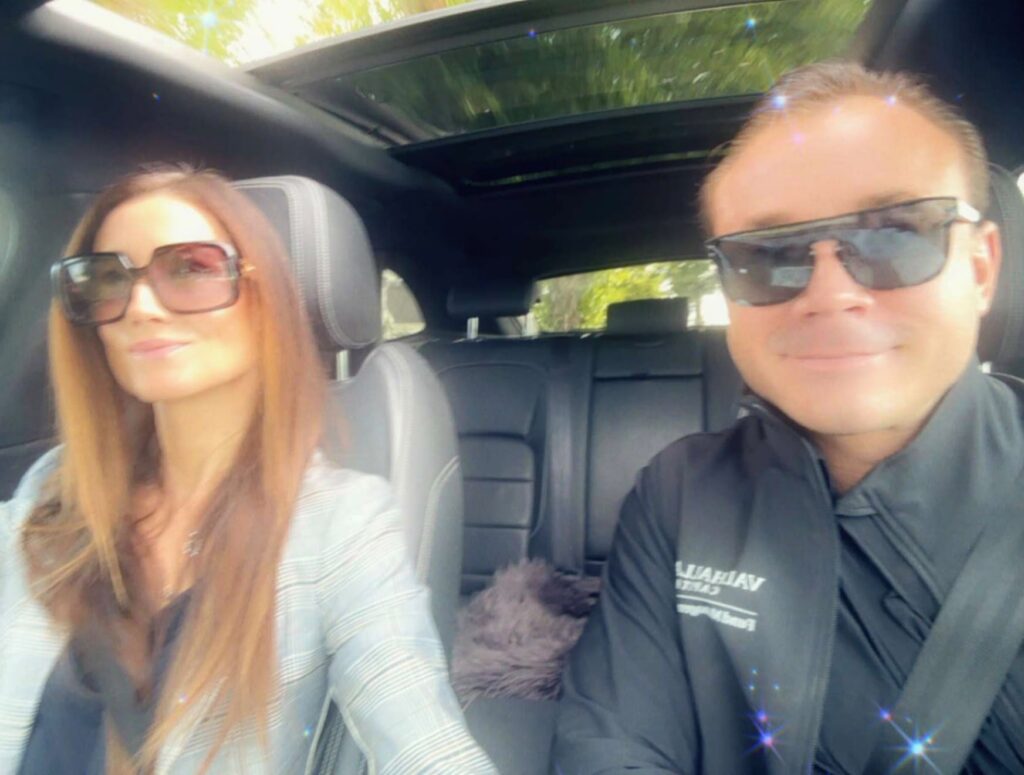
Today began unusually quietly. We started the morning with a walk, followed by breakfast at home around the kitchen table. That may sound completely ordinary, but for us it really is not. Sitting down together for breakfast on a weekday almost never happens. Usually there is somewhere to be, something to remember, a phone to check, a bag to pack or a clock quietly reminding us that we should already be moving.
But yesterday morning felt different. For a little while, there was nowhere else I needed to be. We walked, we ate breakfast, we talked, and perhaps without even knowing it, we were doing something I have been thinking about a lot lately.
We were actually inside the moment.
And Then the Day Disappeared
There was no traffic on the road into Oslo, which almost felt like a small gift in itself. We arrived, the day began, and then suddenly it was gone. Some days seem to do exactly that. You look at the clock in the morning and feel as though you have an entire day ahead of you, and then somehow it is afternoon. A few conversations later, a few things crossed off the list, and suddenly it is evening.
Where does the time go?
I remember being a child and feeling exactly the opposite. A week could feel enormous. Waiting for a birthday felt almost unbearable, summer holidays seemed to last forever, and even a single afternoon could contain an entire little world. Now I sometimes find myself wishing time could feel like that again. Not because I want to go backwards, but because I would love some moments to feel longer.
And then I think about this summer.
Where did it go?
I know there were days, places, conversations, dinners and moments. There are photographs to prove it. Yet when I try to hold the summer in my mind as one long feeling, it almost seems to have slipped through my fingers.
Perhaps you recognise that feeling too.
Why Time Can Feel So Fast
Our perception of time is fascinating because a day measured by a clock is always the same length, yet our experience of that day can be completely different. Research into our perception of time suggests that attention, emotions, routines and the way experiences are stored in our memory all influence whether a period feels long or whether it seems to disappear.
Maybe that is part of the answer.
When we were children, so much was new. New places, new experiences, new people, new discoveries. Life created constant little markers in our memory. As adults, routines can blend days together. We drive the same roads, answer the same kinds of messages and move quickly from one responsibility to another.
Perhaps the answer is not to try to slow time down, because we cannot. Perhaps we simply need to give time more things to attach itself to.
A breakfast around the kitchen table. A walk without rushing. A conversation where the telephone stays in the bag. Going somewhere we have never been. Doing something differently for no other reason than wanting to.
Maybe a full life is not necessarily a life filled with more.
Maybe it is a life we notice more.
How Much Can a Human Being Carry
Thinking about time somehow led me to another subject that fascinates me enormously.
The human mind.
Mental health.
And the question of how much a human being can actually endure.
Life can place extraordinary pressure on us. Loss, fear, illness, responsibility, uncertainty and situations we never imagined we would have to face can suddenly become part of everyday life. And still, human beings have this remarkable ability to continue. We get up. We make coffee. We answer messages. We take care of the people around us. We go to work. We can even laugh at something completely ridiculous in the middle of a period that feels impossibly difficult.
I find that extraordinary.
But I also think we should be careful when we talk about resilience as though being strong means being able to tolerate absolutely everything. The body reacts to what we experience. Stress is not only a thought in our heads. Our brain, nervous system, hormones, immune system and the rest of the body communicate constantly, and prolonged stress can gradually create a biological burden.
So perhaps strength is not always about enduring more.
Sometimes strength can be recognising that enough is enough. Resting before we completely run out of energy. Asking for help. Saying no. Changing direction. Allowing somebody else to carry part of the weight for a while.
That, too, is resilience.
The Incredible Machinery Inside Us
The more I read about the human body, the more fascinated I become by how we are put together. The adult brain continues to adapt throughout life. Connections can change, new skills can be learned and the brain can respond to experience in ways researchers describe through neuroplasticity.
Think about what is happening inside us every second.
Billions of cells are communicating. Electrical impulses are moving through our nervous system. Hormones and chemical signals are constantly being released and adjusted. Our heart keeps beating, our lungs keep breathing and our immune system keeps working, most of it without us consciously telling our body to do anything at all.
And then there are our genes.
The instruction book we carry inside almost every cell of our body.
The more I read about genetics, the more incredible and almost impossible the human body seems.
Fun Fact
Almost every cell in the human body contains a complete copy of approximately three billion DNA base pairs.
Three billion.
All of that information is stored inside something so small that we cannot see it with the naked eye. It is an extraordinary thought, especially when we also know that relatively small genetic changes can sometimes have an enormous effect on a person’s health and life.
And this brings me to something that is very personal to me.
Why I Have Been Reading About Friedreich Ataxia
As many of you know, I have a daughter with Friedreich ataxia.
That naturally means that developments in genetics and rare disease research are not simply interesting science to me. They are personal in a way that is difficult to explain unless you have stood close to someone with a rare diagnosis.
Lately I have been reading more about what is happening internationally, particularly in England and Germany, and there are developments that I find genuinely exciting to follow.
Friedreich ataxia is linked to reduced expression of the FXN gene, which results in too little of a protein called frataxin. That means researchers are investigating different ways of approaching the disease, including attempts to restore gene activity, understand the consequences of reduced frataxin and find better ways to measure changes in the disease over time.
Every time I read about this field, I am reminded of how rapidly medicine is changing.
But I am also reminded of how important it is to separate hope from promises.
Early research is still early research.
A discovery in a laboratory is not the same as a treatment available to a patient.
But it can be the beginning of something.
And beginnings matter.
What Is Happening in England
One development I have been reading about comes from researchers at the University of Oxford, where work is being done on technology designed to explore whether FXN gene expression can be restored. Researchers are looking at methods that could potentially influence the underlying biology of Friedreich ataxia rather than only addressing individual symptoms.
This is still research at an early stage, but that is exactly why it is so interesting to follow.
Elsewhere in England, researchers at the UCL Ataxia Centre are working with genetics, biomarkers and future therapeutic approaches for ataxias. At the same time, there is an increasing discussion about something that becomes incredibly important once medicine actually develops new possibilities.
Access.
Because discovering a treatment is one thing.
Making sure the people who need it can receive it is something else entirely.
What Germany Is Building
Germany is interesting because of the infrastructure being developed around gene and RNA research, clinical studies and rare diseases.
At the University Hospital of Tübingen, researchers are bringing together expertise in areas such as gene therapy, gene editing, RNA based approaches and clinical research. Germany is also involved in long term Friedreich ataxia studies that follow patients and collect detailed information about how the disease develops.
These studies may sound less dramatic than the words gene therapy, but they are incredibly important.
Before researchers can prove that a future treatment changes a disease, they first need to understand what happens when the disease follows its natural course.
That means data matters.
Patient registries matter.
Long term follow up matters.
International cooperation matters.
Suddenly you begin to understand that a medical breakthrough is rarely one brilliant scientist having one brilliant idea. It is usually hundreds or thousands of pieces coming together over many years.
Scientists. Doctors. Patients. Families. Hospitals. Registries. Laboratories. Funding. Data. Technology. And countries willing to share knowledge.
What Can Norway Learn
And naturally, this makes me think about Norway.
What can we learn from what is happening elsewhere?
Rare diseases present us with a particular challenge because there are simply not enough patients in one small country to do everything alone. That makes international collaboration essential. We need to know where the expertise is, which studies are underway and how Norwegian patients can become part of international research networks when relevant.
I would love to see Norway become even better at connecting patients, doctors and researchers directly to the environments where development is moving fastest.
We need strong patient registries. We need information to move quickly. We need doctors who have access to international networks. We need systems that are prepared when new clinical trials or treatments become available.
And perhaps most importantly, families should not have to become full time researchers themselves simply to understand what is happening elsewhere in the world.
Because when you love someone with a rare diagnosis, the words new research carry a different weight.
You read differently.
You listen differently.
And yes, you hope differently.
More Than Simply Getting Through the Day
Maya Angelou once said:
“My mission in life is not merely to survive, but to thrive.”
I think there is an important difference between those two things.
Sometimes surviving is a huge achievement. There are periods in life when simply getting through the day is enough. But I also believe we should be allowed to want more than survival.
We should be allowed to enjoy our lives while we are living them.
To laugh.
To dress beautifully simply because it makes us feel good.
To sit around the kitchen table on an ordinary Thursday morning.
To take the walk.
To notice the summer before it disappears.
To be curious about science and hopeful about tomorrow while still remembering that our life is happening today.
Maybe This Is How We Make Time Feel Longer
And that brings me all the way back to yesterday morning.
To a walk.
To breakfast at the kitchen table.
To something so ordinary that I could easily have forgotten it.
The day raced away afterwards, just as so many days seem to do now. But somehow that quiet beginning stayed with me.
Maybe we cannot make a summer last longer.
We cannot add more hours to a day.
We cannot control everything life places in front of us, and we certainly cannot know what the future will bring.
But we can decide to notice more.
Perhaps that is one small way of making time feel longer.
Not by adding more hours.
By being more present inside the ones we already have.
Motto From Nordè
Do not measure life only by how much you manage to fit into a day. Measure it by how deeply you were present
Tonje
Comments are closed